Start at the centre of the chest
Place the end of the soft tape where the front of the rug will close. Keep the tape flat against the horse without pulling it tight.
A practical check for choosing the right size, adjusting each fastening and spotting pressure, slipping or rubbing before it becomes a problem.
Last reviewed: 24 September 2026 · Guidance checked against current BHS advice
Measure from the centre of the chest, around the widest part of the shoulder and along the side of the body to the point of the buttock. Use that measurement with the rug maker's size chart, then check the actual rug on your horse. A size label alone cannot tell you whether the cut suits their shoulders, withers and body shape.
Stand your horse square on level ground in a safe, quiet place. Use a soft tape that can follow the shape of the body. A second person can help keep the tape level and prevent it dropping beneath the horse.
Measure the horse rather than copying the size of an old rug. Rugs stretch, labels can fade, and sizing and cut vary between manufacturers. A horse can also change shape through growth, work, weight change, ageing or time off.
The British Horse Society recommends measuring along the side of the horse using the following points.
Place the end of the soft tape where the front of the rug will close. Keep the tape flat against the horse without pulling it tight.
Follow the horse's shape rather than drawing a straight line through the shoulder. This makes the measurement more useful for the way a rug sits in practice.
Keep the tape level as it passes across the barrel. Check that it has not sagged, twisted or slipped beneath the widest part of the horse.
Record the full measurement and the unit used. Repeat it once before ordering, especially if the tape moved or the horse changed position.
Compare your measurement with the specific manufacturer's chart. Some brands label rugs using feet and inches, some use centimetres, and some cuts fit broader or narrower horses differently. If the horse falls between sizes, do not assume that sizing up is always safer. A rug that is too large can slip and create friction.
Try a new rug over a clean, dry horse. Keep all packaging and protect the rug from dirt until you know it fits and can confirm the seller's return conditions.
Place the folded rug over the withers and neck, settle it into the intended position, then unfold it evenly over the body.
Close the front without dragging the rug forwards. The fastening should be secure without pulling or creating a wide gap.
Adjust the surcingles so they are secure and clear of the legs, but not tight against the belly. Follow the maker's instructions.
Look from both sides, the front and behind. The rug should sit straight and evenly rather than twisting to one side.
The BHS Stage 1 care syllabus identifies length, depth, strap length and common places for rubs or sores as core fitting checks.
The rug should close securely without pulling across the chest, pressing the windpipe or falling backwards behind the shoulders.
Check that the front edge does not dig in. The horse should be able to walk, reach down and move the forelegs without restriction.
Look for pressure, pinching or fabric being pulled tightly onto the withers. High-withered horses may need a different cut.
The rug should cover the body as the maker intends without hanging far beyond the horse or finishing so short that it pulls forwards.
Both sides should hang evenly and cover the barrel. Excessive depth can bring fabric and straps too close to the legs.
Surcingles, leg straps and fillet strings must be secure, untwisted and adjusted for that design. Replace damaged fittings before use.
A rug can look acceptable while the horse stands still and fail once they walk or lower their head. Lead the horse for a few steps in a safe area. Watch the shoulders, neckline and quarters, then allow the horse to lower their head as if grazing.
The spine seam should remain aligned rather than rotating down one side.
Look for pulling at the chest, shortened steps or resistance when the horse reaches down.
Straps must not hang low enough to risk a leg becoming caught.
Do not try to solve every problem by loosening a fastening. The horse may need another size or a differently shaped rug.
Do not keep using a rug that is causing injury: remove or replace a rug that is rubbing, pressing on the withers, restricting movement or creating a risk of entanglement. Seek veterinary advice for broken skin, swelling, pain or any wound that concerns you.
The BHS advises removing rugs daily to check for rubbing, soreness and discomfort. A rug that fitted when first bought can shift, stretch or become unsuitable as the horse changes shape.
Do not rely on looking around the edges. Inspect the skin and coat across the chest, shoulders, withers, back and quarters.
Run your hands over likely pressure points and look for flattened hair, broken hair, swelling, dampness or a pain response.
Look for twisted straps, damaged clips, stretched fastenings, rough seams, dirt and damp lining that could affect comfort or safety.
Reassess after weight change, clipping, muscle development, growth, illness or a change in the layers worn beneath the rug.
Secure the horse appropriately and keep loose straps controlled. The BHS advises placing the rug over the withers and neck, positioning it before fastening the chest, unfolding it evenly, and then securing the remaining straps without making them overly tight.
To remove it, undo every fastening, fold the rug neatly while it remains on the horse, and slide it backwards over the quarters in the direction of the coat. Work calmly and adapt the routine to the horse, the conditions and the rug design.
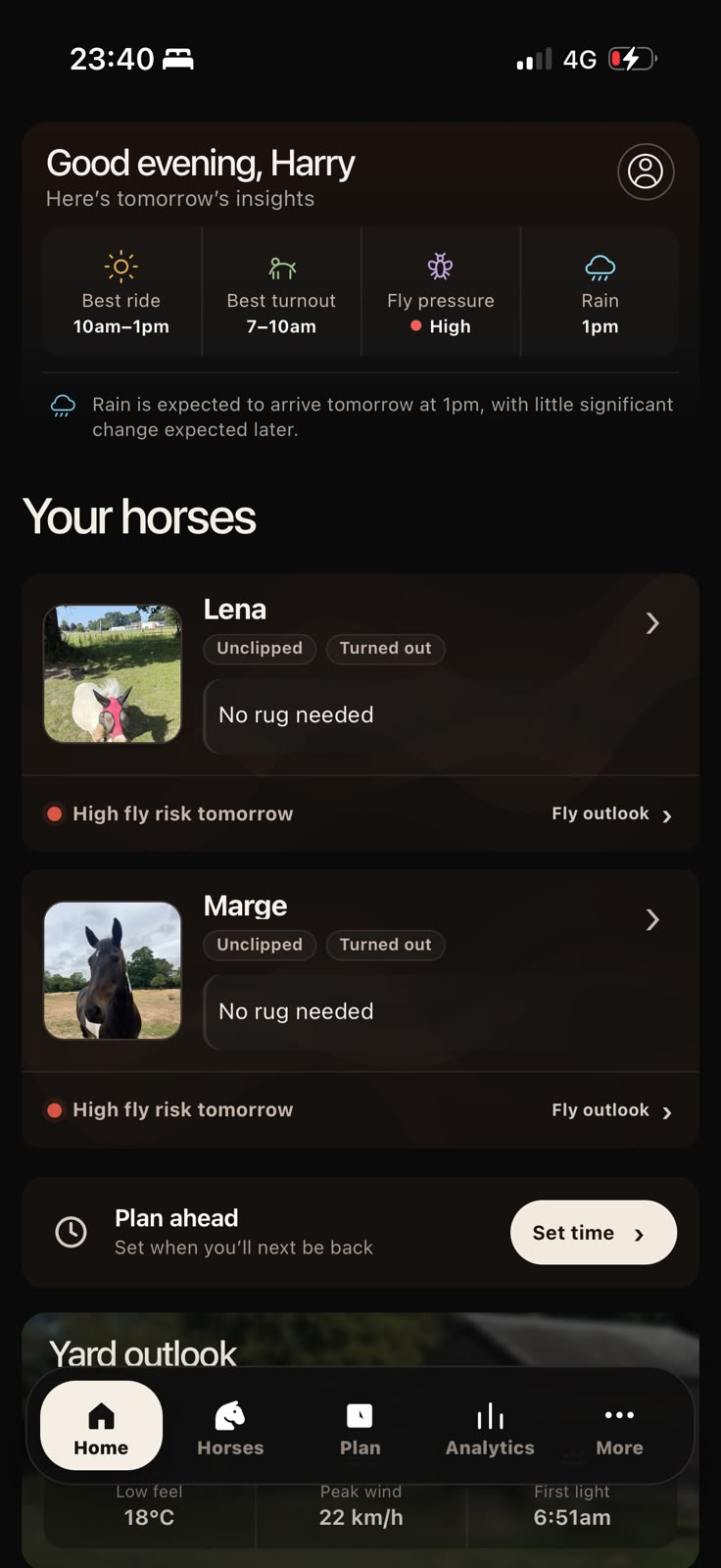
A well-fitted rug still needs to suit the horse and the weather ahead. RugWeather combines the forecast with your horse's profile and available rugs to give you a practical starting recommendation.
Add RugWeather to your home screen so you can check rug recommendations quickly.